

Custom AI Agents & Agentic Workflows
Agentic AI Development Services
for Production Workflows
SensViz designs and builds AI agents that use your data, tools, and business rules to complete defined work — with clear permissions, evaluation, monitoring, and human oversight.
Selected AI products and systems built by SensViz










Beyond chatbots and fixed automation
AI agents that can decide, act, and ask for help
Agentic AI combines a model with business context, tools, permissions, and an execution loop. An agent can interpret a goal, choose an approved next step, use connected systems, check the result, and continue until the task is complete or human judgment is required. Not every process needs this flexibility. SensViz starts with the simplest reliable architecture — conventional automation for predictable rules, an agentic workflow for variable decisions, or a hybrid that combines both.
Bounded autonomy
Each agent works inside an explicit scope, with limits on what it can decide and change.
Tool use
Agents act through defined tools and APIs, so every action maps to a real system.
Human approval
Sensitive steps pause for a person to review, approve, or reject before they run.
Traceable execution
Every run leaves a record of inputs, tool calls, and outcomes you can audit.
What we build
Agentic AI development services built around real responsibilities
From one focused agent to a coordinated system of specialists, each solution is designed around a measurable outcome, the systems it must use, and the level of authority it should have.
Custom AI agent development
Purpose-built agents that research, analyze, prepare decisions, and take approved actions across a defined workflow. We design the instructions, tools, state, permissions, stopping conditions, and fallback paths around your operating rules.
Multi-agent system development
Coordinated specialist agents for work that benefits from separate roles such as planning, retrieval, execution, review, or escalation. We use multi-agent architecture only when it improves reliability, control, or throughput.
Knowledge and retrieval agents
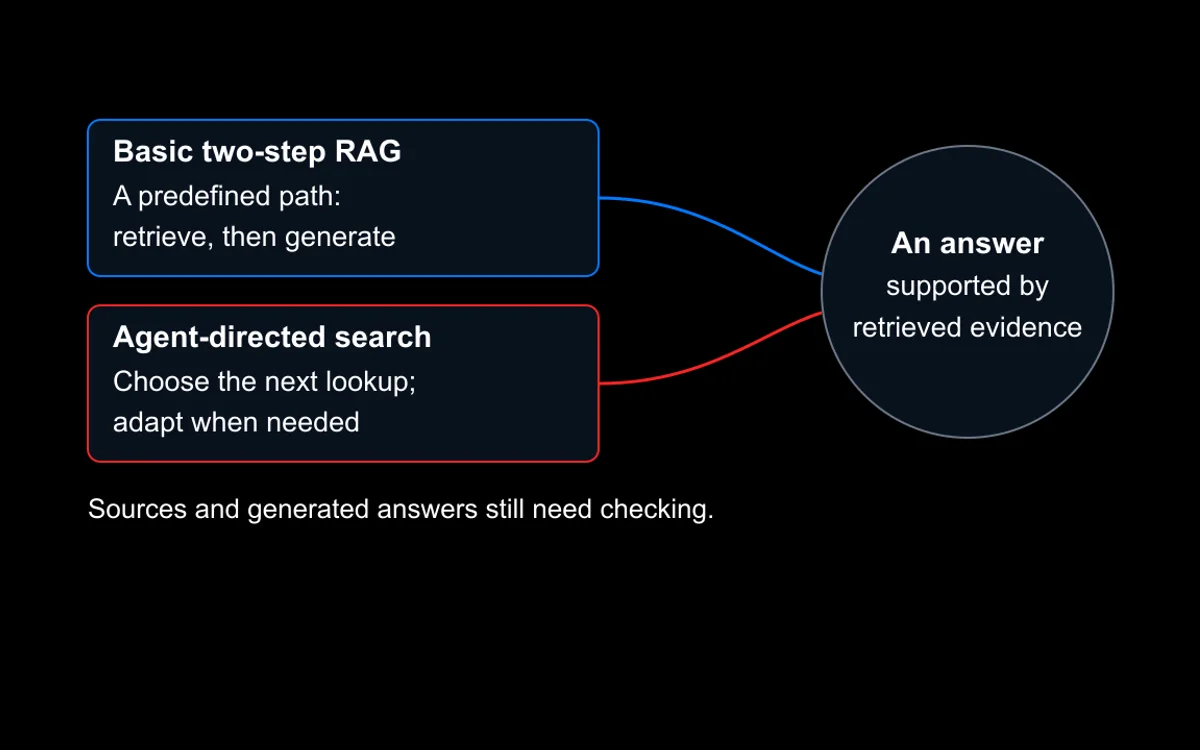
Agents grounded in approved documents, databases, policies, and product knowledge. Retrieval and source references help the system use current business information instead of relying only on general model knowledge.
Tool, API, and workflow integration
Connect agents to CRMs, databases, document stores, communication tools, cloud services, and internal applications. Every tool receives a clear purpose, input contract, permission boundary, and failure path.
Conversational, voice, and embedded agents
Action-enabled agents delivered through chat, voice, or a product interface. They can retrieve context, update records, coordinate next steps, and hand sensitive or unusual cases to a person.
Agent evaluation and lifecycle support
Evaluation datasets, trace review, guardrails, monitoring, cost and latency tracking, incident handling, and iterative improvement for agents operating in production.
Built for production
The system around the agent determines whether it can be trusted
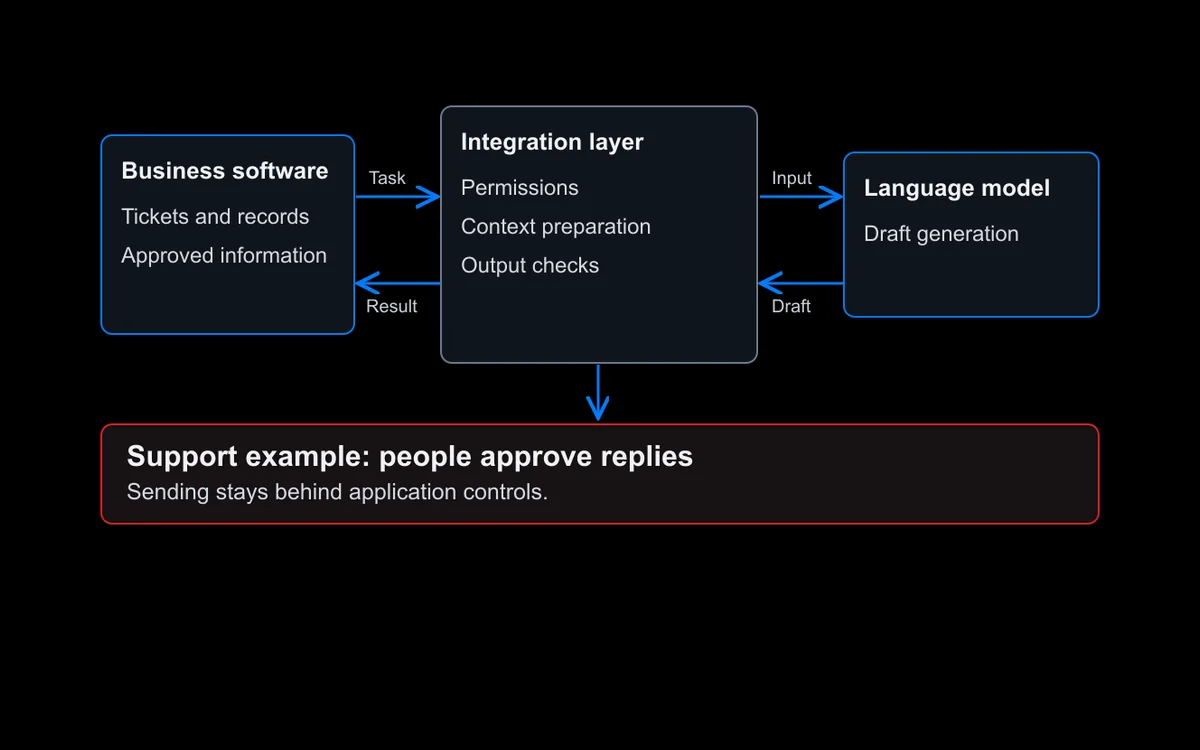
A production agent is more than a prompt connected to a model. SensViz combines the components needed to keep the system useful, observable, and appropriately controlled throughout each run.
We select models, orchestration frameworks, retrieval systems, integration patterns, and cloud services according to the workflow's accuracy, latency, cost, privacy, and deployment requirements — not trend value.
Grounding and business context
Approved documents, data, and retrieval pipelines give the agent relevant context and, where required, traceable source references.
Tools and action interfaces
Well-defined APIs and tool contracts let the agent retrieve information or take approved actions without unnecessary system access.
Orchestration, state, and memory
Execution logic manages steps, handoffs, checkpoints, and task state. Memory is scoped to the workflow and retained only when it provides clear value.
Agent identity and authorization
Authentication, least-privilege access, action-level permissions, and approval requirements define what each agent can see and do.
Evals, guardrails, and recovery
Representative test cases, input and output checks, tool safeguards, stopping conditions, retries, and fallback paths reduce avoidable failures.
Tracing and observability
Execution traces, tool-call logs, quality signals, latency, cost, completion rates, and exception monitoring make production behavior visible.
- Business context
- Agent loop
- Approved tools
- Human approval
- Monitoring
Where agents create value
Agentic workflows for high-friction operational work
Agentic AI is most useful when a workflow has a clear goal, reliable context, accessible tools, variable decisions, and an outcome that can be evaluated.
Research and intelligence
Gather from approved sources, compare evidence, organize findings, and prepare structured briefs for review.Customer operations
Retrieve account context, resolve routine requests, update systems, route exceptions, and escalate sensitive cases.Sales operations
Research accounts, prepare tailored drafts, update CRM records, and coordinate follow-up within approved rules.Document and data operations
Extract, classify, validate, enrich, and route information from documents, forms, messages, and operational data.Internal knowledge
Help teams find and act on answers across policies, project files, product information, and company knowledge.Cross-system workflow orchestration
Coordinate steps across multiple applications, track progress, handle expected exceptions, and request approval before high-impact actions.How we deliver
From workflow discovery to a monitored agent in production
Every engagement starts with the workflow, its risk, and a measurable definition of success. Autonomy expands only when testing and production evidence support it.

Workflow discovery
Map the process, owners, systems, decisions, exceptions, and desired outcome.
Feasibility and risk mapping
Choose an agent, fixed automation, or hybrid approach; define data, privacy, access, and approval requirements.
Architecture and success criteria
Design the tools, grounding, orchestration, state, permissions, failure paths, and evaluation plan.
Prototype and evaluation
Test representative cases, inspect traces, measure outcomes, and refine behavior before expanding access.
Integration and deployment
Connect approved systems, implement controls, deploy into the workflow, and prepare the team for use.
Monitoring and improvement
Track quality, completion, cost, latency, exceptions, and interventions; improve only where evidence justifies it.
Relevant AI systems experience

GrantMatch: grounded discovery and context-aware recommendations
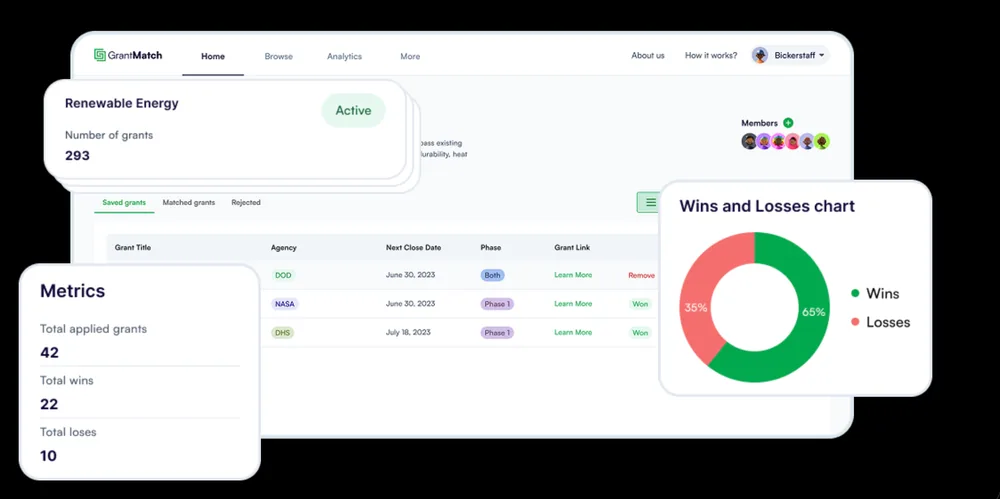
SensViz helped build GrantMatch, an AI-powered platform that combines language models, recommendation logic, and vector search to surface relevant grant opportunities based on a user's profile and needs.
The project demonstrates foundations that also matter in dependable agentic systems: retrieving domain-specific information, working with user context, ranking possible outcomes, and delivering useful recommendations through a production software experience.
Why SensViz
An engineering partner for the complete Agentic AI lifecycle
Business-first scoping
We start with the workflow, operating constraints, and success criteria before choosing a model or architecture.
Production controls from day one
Permissions, evals, guardrails, traceability, human approvals, and fallback behavior are designed with the system.
Integrated software delivery
AI engineering, product UX, application development, APIs, cloud deployment, and support stay connected under one team.
Architecture without unnecessary complexity
We default to the simplest design that works and add agents, tools, or specialist roles only when they provide measurable value.
Model-agnostic decisions
We choose commercial or open-source models according to accuracy, cost, latency, privacy, and deployment requirements.
Ongoing evaluation and improvement
Production behavior is measured so the team can find failure patterns, control cost, and expand capability responsibly.
Want the wider picture? Read more about SensViz and how the team works.
Choose for production, not the demo
What to look for in an Agentic AI development partner
A convincing prototype is only the beginning. Before selecting a partner, ask how the team will control access, evaluate behavior, connect your systems, handle failures, and support the agent after launch.
Workflow fit
Can the team explain when an agent is appropriate — and when fixed automation is safer or more efficient?
Evaluation evidence
Will success be tested on representative cases with measurable pass criteria before production access expands?
Identity and permissions
Can every agent and tool be limited to the data and actions required for its responsibility?
Traceability and recovery
Will the system log actions, surface exceptions, stop safely, and provide clear fallback or escalation paths?
End-to-end delivery
Can the partner connect AI engineering with product design, software integration, cloud deployment, monitoring, and support?
Explore more
Related AI and software development services
Agentic AI often works alongside workflow automation, custom AI systems, SaaS products, and the software your team already uses. Explore the service that matches the job you need to complete.
Frequently asked questions
Agentic AI development is the design and engineering of systems that can work toward a defined goal, choose approved actions, use tools, observe results, and continue until the task is complete or human input is required. Production systems also need grounding, permissions, evaluation, guardrails, monitoring, and recovery paths.
A chatbot mainly responds within a conversation. Traditional automation follows predefined rules. An AI agent can choose among approved next steps and use connected tools as conditions change. Many dependable business systems combine all three approaches.
A single agent is usually better for a focused responsibility with a clear outcome. Multiple agents are useful when separate roles, permissions, parallel work, or independent review improve the result. SensViz recommends the simplest architecture that meets the workflow's requirements.
Yes. Agents can connect to approved APIs, CRMs, databases, document stores, communication tools, cloud services, and internal applications. Access should be limited to the information and actions required by the workflow.
We define success criteria, build representative evaluation cases, test tool use and failure paths, review execution traces, and measure outcomes such as task completion, accuracy, exceptions, latency, cost, and human interventions. Evaluation continues after deployment.
Controls can include agent identity, least-privilege permissions, input and output checks, tool-level safeguards, approval gates, stopping conditions, audit logs, and escalation paths. Higher-impact or irreversible actions can require explicit human approval.
SensViz works with suitable commercial and open-source models, retrieval systems, orchestration frameworks, vector databases, APIs, and cloud platforms. The stack is selected according to accuracy, latency, cost, privacy, integration, and deployment requirements.
The timeline depends on workflow complexity, data readiness, system access, risk, and the number of integrations. After discovery, SensViz recommends a phased plan that tests the highest-risk assumptions before expanding the agent's responsibilities.
Ownership is defined in the project agreement. SensViz's standard approach is for clients to own the agreed custom deliverables and their business data, while third-party models, platforms, and open-source components remain subject to their own licences and terms.
Planning a budget? See our AI and software pricing.
Start with one workflow
Build an AI agent around work your team needs to complete
Tell us where work slows down, decisions repeat, or information moves between systems. SensViz will assess the workflow, recommend the right level of automation, and outline a practical path from discovery to production.
If a simpler automation approach is a better fit, we will tell you.